
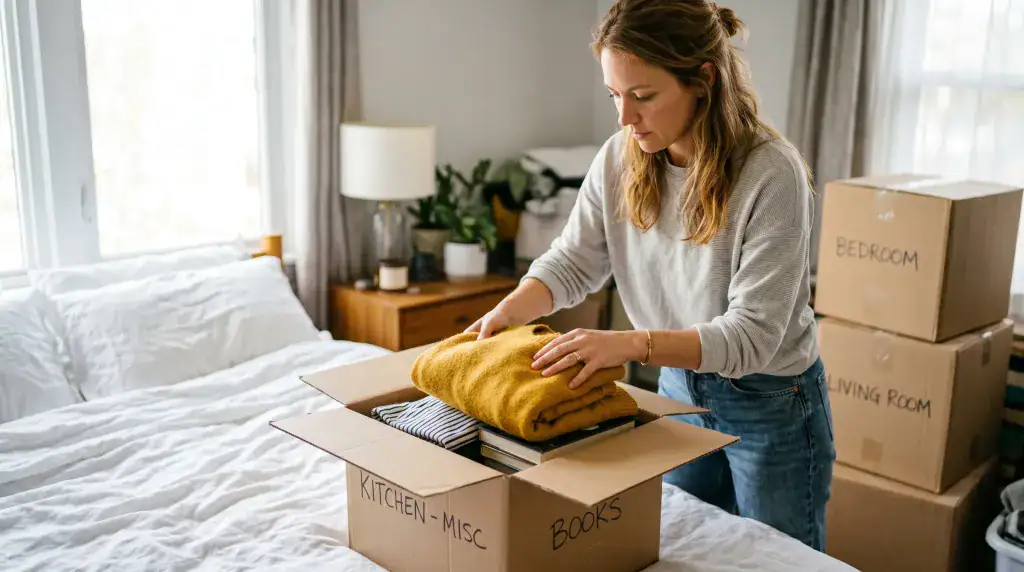
Most people do not think twice about packing their clothes, they grab a garbage bag, stuff it full, and figure it will all work out. It usually does not. Bags fall apart, hangers tangle, wrinkles set in during a long move, and on arrival day you are digging through a pile to find one clean shirt.
There is a better way. This guide covers exactly how to pack clothes for moving, whether you are dealing with a closet full of hanging items, dresser drawers packed with folded clothes, or a mix of both. We will cover wardrobe boxes, the garbage bag hack, what to pack first versus last, and five mistakes our crew sees on almost every job.
Should You Pack Clothes in Boxes or Leave Them in Drawers?
The honest answer depends on the move. For hanging clothes, you always need a wardrobe box or the garbage bag method, there is no shortcut there. For folded clothes, leaving them in dresser drawers is an option, but it comes with trade-offs.
Dresser drawers work fine for short local moves in Winnipeg. The downside: full drawers make dressers heavy, sometimes too heavy to carry safely up stairs or through tight hallways. Your movers will move slower, which costs more time on an hourly rate. For long-distance moves or anything with stairs and tight corners, empty the drawers and pack clothes in boxes.
Rule of thumb:
- Short local move, single floor, no stairs → drawers are fine
- Stairs, multiple floors, long haul, or older Winnipeg homes with narrow hallways → empty the drawers, box the clothes
How to Pack Hanging Clothes for Moving
Hanging clothes are the most awkward items to move. They cannot go flat in a box and they wrinkle badly if bunched wrong. There are three methods, one best, one quick and free, one last resort.
Use a Wardrobe Box (Best Method)
A wardrobe box is a tall cardboard box with a metal hanging bar across the top. Your clothes go in on their hangers, hang vertically through the move, and come out at the other end exactly as they went in, no wrinkles, no untangling.
We stock wardrobe boxes at our Pembina Hwy location along with all other moving supplies. One wardrobe box holds approximately 20 to 25 hanging items. A standard bedroom closet typically fills 2 to 3 boxes.
How to load a wardrobe box:
- Group clothes by type, shirts together, pants together, heavier jackets at the back
- Do not overfill, items should hang freely without compressing
- Fill any floor space at the bottom with folded items (shoes, scarves, small bags)
- Close and tape the top securely
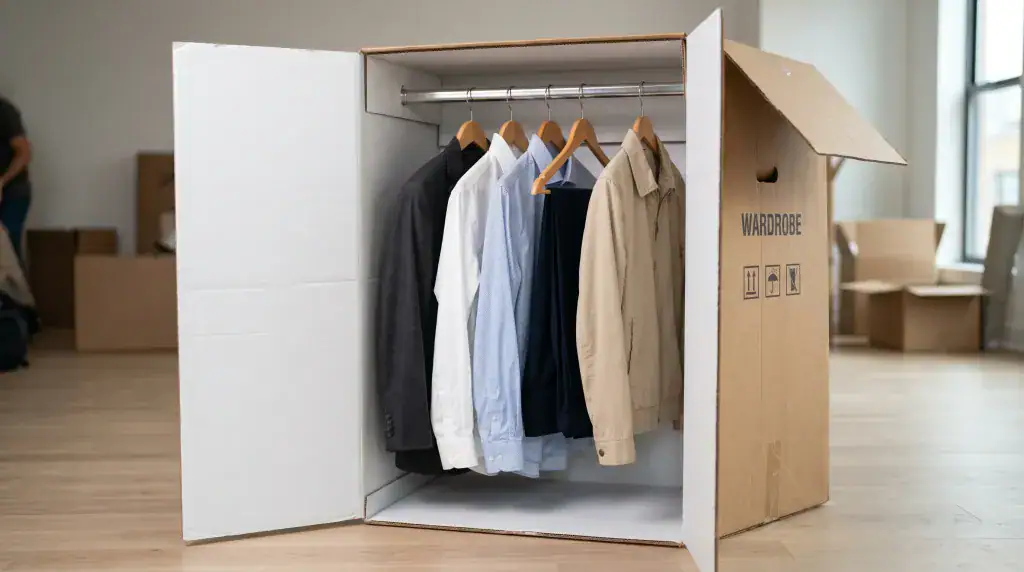
Pro Tip from the Crew: Our crew uses wardrobe boxes on virtually every residential move in Winnipeg. They are especially critical in older homes like those in Wolseley and River Heights, where narrow hallways and tight corners make maneuvering a challenge, keeping clothes in their boxes until the destination protects them from walls and door frames.
The Garbage Bag Hack (Quick, Free)
If you are doing a short move and do not want to buy wardrobe boxes, this works:
- Bunch 10 to 15 items together on their hangers
- Slide a large garbage bag up from the bottom, over the clothes
- Tie or rubber-band the bag around the hook area at the top
- The hangers poke through or stay contained at the top
Your clothes travel still on their hangers, protected from dust and light scuffing. It is not perfect, bags can tear if you overload them, and heavy wool coats or structured jackets do not travel well this way. But for a quick local move, it gets the job done.
When NOT to use this method: Long-distance moves, delicate fabrics, heavy winter coats, or anything dry-clean only. Use a wardrobe box instead.
Fold Into a Box (When Space Is Tight)
If you are short on wardrobe boxes and need to pack hanging items flat, fold each item carefully, alternate the direction of layers, and keep the box under 30 lbs. This works for casual shirts and light pants, not structured jackets or anything that wrinkles easily. Label the box “CLOTHES, FRAGILE FOLD” so your movers handle it accordingly.
How to Pack Folded Clothes for Moving
Folded clothes, t-shirts, jeans, sweaters, underwear, socks, are the easiest to pack once you know the rules.
Which Box Size to Use
Use medium boxes (standard moving box, roughly 18″ × 18″ × 16″). Not large boxes.
This surprises people. Clothes feel light, so the instinct is to grab a big box and fill it. But a large box packed with jeans and sweaters can easily hit 50+ lbs, too heavy to carry safely, and a real risk for back injuries (yours or your mover’s). A medium box packed well stays under 30 lbs and is easy to stack.
Line the bottom of each box with a large garbage bag if you are doing a long-distance move or storing clothes temporarily, it protects against moisture.
Rolling vs Folding
Both work. Rolling saves roughly 20% more space and reduces some wrinkles for casual items. Folding is faster. For most moves, do both: roll casual items (t-shirts, jeans, socks) and fold nicer items flat.
Either way, keep similar items together and fill boxes to the top, half-empty boxes collapse under stacking weight.
Weight Limit
30 to 35 lbs maximum per box. The test: if you cannot lift it with one arm, it is too heavy. Redistribute into a second box.
What to Pack First vs Last
Packing order matters more than most people expect. Start wrong and you will spend the final days before move day scrambling.
Pack First (2 to 4 Weeks Out)
- Seasonal clothes you are not wearing right now (winter gear in May, summer gear in October)
- Rarely-worn items: formal wear, special occasion outfits, costume pieces
- Extra bedding, spare linens, guest towels
- Off-season shoes
Pack Last (Final 2 Days)
- Clothes you are wearing this week, leave out enough for 5 to 7 days minimum
- One or two work outfits for the week of the move
- Gym clothes, pajamas, everyday casual wear
The Night-Of Bag
Before movers arrive, pack a separate bag, not a moving box, with 2 days of clothes, toiletries, phone charger, and any medications. Keep it with you, not in the truck. When you arrive at your new place, you wo not need to dig through a dozen boxes just to find a clean shirt.
5 Common Mistakes When Packing Clothes for a Move
Our crew sees these on almost every job. Avoid them.
1. Using garbage bags without a system Unlabeled black garbage bags are the enemy. They look identical to actual trash bags, they get mixed up, they fall over in the truck, and nobody knows what is inside. If you use the garbage bag hack for hanging clothes, keep all moving bags in one spot and tie a colored ribbon around the top to distinguish them from trash.
2. Overpacking boxes A box that is too heavy does not just hurt your back, it tears at the bottom and dumps your clothes on the driveway. 30 lbs maximum. If in doubt, use a second box.
3. Packing dirty laundry A sealed box in a hot moving truck for 4 to 6 hours is a bad place for dirty clothes. The odor seeps into clean items next to them. Do a load of laundry before packing, or at minimum, pack dirty clothes separately and label them clearly.
4. Forgetting to pack a move-day outfit separately Do not wear your best clothes on moving day. And do not pack your entire wardrobe into the truck before you have put on that day’s outfit. Set aside exactly what you will wear on move day, keep it accessible, and pack everything else.
5. Leaving it to the night before This is the biggest one. Kade Cote, who co-founded Calculated Moving back in 2018, sees it constantly:
Most commonly, people do not allow themselves enough time for packing. If you start packing the night before, you will never be done in time. In general, customers often assume they will have more prep work done ahead of time than they end up having time for.
Start packing clothes 1 to 2 weeks before your move. Seasonal and rarely-worn items first. Everyday clothes last.
Packing more than just clothes? Use our complete packing checklist for moving for a room by room plan, a supplies list, and a moving day checklist.


